

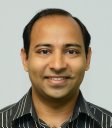
 Akash Kumar
· 3 previous affiliations
- Ruhr University BochumSince 2024
- Full Professor · Since 2024
- Technische Universität Dresden2015–2024
- Full Professor · 2015–2024
- National University of Singapore2009–2015
- Assistant Professor · 2009–2015
2 other authors named Akash Kumar: Akash Kumar (Zendar · 8 papers), Akash Kumar (University of California San Diego · 6 papers)
Research Overview
Akash Kumar focuses on computer architecture, hardware security, and memory system optimization. His trajectory spans early work in GPU acceleration and non-volatile memory integration to later collaborative contributions in approximate computing. Most recently, his research emphasizes intellectual property protection through secure scan-obfuscation and logic locking.
Research Trajectory
Kumar’s early research focused on hardware acceleration and the optimization of memory architectures for embedded systems and graphics processing units (GPUs). In 2014, as a second author, he contributed to Accelerating Volume Image Registration through Correlation Ratio Based Methods on GPUs. This work explored the design space for GPU acceleration in medical image processing, specifically comparing Correlation Ratio-based schemes against traditional Mutual Information methods. The research highlighted the trade-offs of introducing shadow histograms across different storage levels, such as shared and global memory, to reduce resource overhead. This interest in memory optimization extended to non-volatile memory (NVM) technologies. He participated in developing techniques for Accelerating non-volatile/hybrid processor cache design space exploration for application specific embedded systems, which utilized novel cache behavior modeling equations and miss prediction mechanisms to significantly speed up the evaluation of NVM and hybrid FIFO processor caches.
Moving into the mid-2010s, Kumar’s collaborative work expanded to include approximate computing and system reliability. He was part of research teams investigating how to trade exactness for performance and energy efficiency in hardware design. This included middle-author contributions to SFU-Driven Transparent Approximation Acceleration on GPUs, which targeted the acceleration of traditional scientific applications—such as weather and nuclear simulations—that rely heavily on transcendental function calls and are typically sensitive to accuracy loss. He also participated in broader hardware optimization efforts, such as the development of DeMAS: An efficient design methodology for building approximate adders for FPGA-based systems. This research addressed the limitations of applying ASIC-based approximation techniques (like simple gate truncation) to FPGAs, proposing a methodology tailored to the specific architectural resources of FPGA-based systems. During this period, his contributions reflected a broad engagement with hardware efficiency, ranging from soft-error vulnerability analysis in multi-core caches to locality-aware clustering for GPUs.
By 2020, Kumar’s research trajectory demonstrated a distinct pivot toward hardware security, specifically addressing vulnerabilities in silicon-based intellectual property (IP). As the senior author, he led the development of SeqL: Secure Scan-Locking for IP Protection. This work addressed the vulnerability of sequential circuits to logic-locking attacks executed through scan-chains, where attackers selectively initialize combinational logic to analyze responses. By selectively locking flip-flop functional-input and scan-output pairs, the SeqL methodology achieves functional isolation, rendering decrypted keys functionally incorrect and successfully hiding the IP from unauthorized extraction.
Current Directions
The most recent papers in the evidence, spanning up to 2023, indicate a continued focus on hardware security and the theoretical validation of obfuscation techniques. Recent work investigates advanced secure scan-obfuscation methodologies designed to resist sophisticated removal and Boolean satisfiability (SAT)-based attacks. This includes exploring the scrambling of flip-flops with feedback to increase key length without introducing new vulnerabilities into the circuit design, addressing limitations in earlier scan-locking frameworks that struggled with inadequate numbers of flip-flops. Additionally, Kumar has participated in large-scale collaborative research exploring the intersection of machine learning and logic synthesis, investigating how learning algorithms might be used to trade exactness for generalization when implementing incompletely-specified Boolean functions.
Profile updated
Loading new papers…
Other researchers whose papers cluster into the same research directions — a proxy for overlapping technical interests and shared intellectual neighborhoods.
See something wrong? Report a mistake