

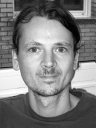
 Aitor Soroa
· 1 previous affiliation
- University of the Basque CountrySince 1996
- Associate Professor · Since 2002
- Lecturer · 1996–2002
Research Overview
Aitor Soroa focuses on natural language processing, specifically word sense disambiguation, lexical semantics, and the integration of structured knowledge bases with language models. His trajectory spans early graph-based algorithms for unsupervised disambiguation to the development of continuous vector representations that merge text and knowledge graphs. Recently, his work addresses the cultural grounding and evaluation of large multilingual language models.
Research Trajectory
Soroa’s early research investigated the unsupervised induction and tagging of nominal word senses using graph-based algorithms. In Two graph-based algorithms for state-of-the-art WSD (2006), he demonstrated that parameter optimization on a small sample of nouns generalizes across the lexicon, achieving performance competitive with supervised systems. This work contributed to the broader area of Learning Universal Topological Vocabularies for Graph Transfer, establishing foundational techniques for graph clustering in semantic tasks.
By 2009, his research expanded to evaluate how distributional and WordNet-based methods capture semantic relationships. He led A Study on Similarity and Relatedness Using Distributional and WordNet-based Approaches, which intersected with research directions such as The Context Window Tradeoff in Distributional Semantics and Overcoming the Lexical Bottleneck with Dynamic Knowledge. Concurrently, he explored how knowledge-based systems could outperform generic supervised models in specialized contexts, as detailed in Knowledge-Based WSD and Specific Domains: Performing Better than Generic Supervised WSD. These studies advanced the understanding of Lexical Representation through Semantic Graph Topology and the area of Semantic Lexicon Expansion with Word Embeddings.
Moving into the mid-2010s, Soroa applied graph-based techniques to entity recognition and disambiguation. He developed systems utilizing Personalized PageRank algorithms to filter and link mentions, as described in UBC entity recognition and disambiguation at ERD 2014. Continuing this focus on disambiguation, he also investigated methods to mitigate sparse contextual information, participating in research on Alleviating Poor Context with Background Knowledge for Named Entity Disambiguation.
As neural network language models gained prominence, Soroa focused on integrating structured knowledge bases into continuous vector spaces. With collaborators, he proposed a novel approach in Random Walks and Neural Network Language Models on Knowledge Bases, which combined random walks over large repositories like WordNet with neural models to produce dense word representations with significantly smaller memory footprints. He further explored the synthesis of text and structured data in Single or Multiple? Combining Word Representations Independently Learned from Text and WordNet, finding that simple combination methods often outperformed more complex techniques like Canonical Correlation Analysis or retrofitting. During this period, he also contributed to relation extraction by addressing errors in distantly supervised data, utilizing knowledge inference to detect false negative training examples in Improving distant supervision using inference learning.
Current Directions
The most recent papers in the evidence indicate a shift toward evaluating the cultural and linguistic capabilities of large language models (LLMs). Recent work investigates how well these models capture local, non-anglocentric knowledge, particularly in lower-resource or culturally specific contexts. In BertaQA: How Much Do Language Models Know About Local Culture? (2024), Soroa and his collaborators introduced a parallel English-Basque trivia dataset to probe the limits of state-of-the-art LLMs. This research highlights a significant performance gap between global and local cultural knowledge, contributing to the emerging research direction of Culturally Grounded Benchmarks for Multilingual Evaluation.
Profile updated
Loading new papers…
Other researchers whose papers cluster into the same research directions — a proxy for overlapping technical interests and shared intellectual neighborhoods.
See something wrong? Report a mistake