

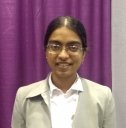
 Aishwarya Padmakumar
· 7 previous affiliations
- Nvidia (United States)Since 2024
- Researcher · Since 2024
- Amazon (United States)2020–2024
- Senior Applied Scientist · 2023–2024
- Researcher · 2020–2024
- The University of Texas at Austin2015–2020
- PhD student · 2015–2020
- Research Intern · 2018
- Research Intern · 2017
- Bachelor of Technology (B.Tech.), Computer Science and Engineering · 2011–2015
- Research Intern · 2014
Research Overview
Aishwarya Padmakumar focuses on embodied artificial intelligence, natural language processing, and human-robot interaction. Her research trajectory spans from developing interactive conversational agents and task-driven embodied systems to advancing the safety and alignment of large language models. Currently, she investigates methods for aligning generative models using natural language feedback and expanding vision-and-language navigation into diverse outdoor environments.
Research Trajectory
Padmakumar’s early work explored how agents can learn efficiently during interactive tasks. In 2018, she introduced a reinforcement learning policy for opportunistic active learning, allowing agents to balance task completion with model improvement during object retrieval tasks (Learning a Policy for Opportunistic Active Learning).
By 2021, her focus expanded to conversational AI, particularly addressing data scarcity and factual reliability. She contributed to the broader area of Synthetic Dialogue Generation for Low-Resource Domains through the development of Generative Conversational Networks, a meta-learning approach where conversational agents use reinforcement learning to generate their own labeled training data to improve intent detection and slot tagging (Generative Conversational Networks). Concurrently, she participated in evaluating the factual correctness of knowledge-grounded response generation, helping to establish human annotation frameworks to distinguish between factually consistent responses, hallucinations, and non-verifiable chitchat (Rome was built in 1776: A Case Study on Factual Correctness in Knowledge-Grounded Response Generation).
In 2022, Padmakumar led significant efforts at the intersection of natural language and embodied AI. She spearheaded the creation of the TEACh dataset, a collection of over 3,000 human-human interactive dialogues designed to train task-driven embodied agents in simulated household environments (TEACh: Task-Driven Embodied Agents That Chat). This work established benchmarks for agents that must navigate, interact with objects, and use conversation to resolve ambiguities with a human commander. Expanding on this embodied dialogue theme, she collaborated on research defining dialog acts specifically for task-driven agents (Dialog Acts for Task Driven Embodied Agents) and investigated the limits of evaluating model generalization in these settings (On the Limits of Evaluating Embodied Agent Model Generalization Using Validation Sets). She also contributed to studies on how language facilitates action learning in interactive visual environments (ALFRED-L: Investigating the Role of Language for Action Learning in Interactive Visual Environments).
Moving into 2023, her research increasingly integrated large language models (LLMs) with embodied planning and alignment. She developed methods for multimodal embodied plan prediction, demonstrating that multimodal transformers augmented with synthetic dialogue can outperform language-only models for high-level task planning (Multimodal Embodied Plan Prediction Augmented with Synthetic Embodied Dialogue). Her interest in simulated robotics culminated in her participation in the Alexa Prize SimBot Challenge, an initiative advancing the research direction of Closing the Sim-to-Real Gap in Robotics by tasking teams with building virtual robots capable of understanding and executing natural language commands (Alexa, play with robot: Introducing the First Alexa Prize SimBot Challenge on Embodied AI).
Parallel to her embodied AI work, Padmakumar explored the internal mechanisms and alignment of LLMs. She collaborated on techniques for injecting knowledge into encoder-decoder models (KILM: Knowledge Injection into Encoder-Decoder Language Models). Crucially, she contributed to the research areas of Direct Preference Optimization for Reward Model Free Alignment and Learning from Natural Language Feedback by co-developing "Critique and Revise" (CnR). This data-efficient method fine-tunes smaller LLMs on human critiques and revisions to align model outputs with human preferences using minimal examples (Data-Efficient Alignment of Large Language Models with Human Feedback Through Natural Language).
Current Directions
The most recent papers in the evidence indicate a dual focus on the safety of generative AI and the expansion of embodied navigation into complex, real-world domains. In the realm of AI safety, recent work investigates comprehensive risk taxonomies for large language models, addressing the need for high-quality, human-annotated datasets to train robust LLM guardrails across diverse hazard categories (AEGIS2.0: A Diverse AI Safety Dataset and Risks Taxonomy for Alignment of LLM Guardrails). Simultaneously, Padmakumar continues to advance vision-and-language navigation (VLN) by moving beyond simulated indoor environments. Her recent research utilizes driving videos from multiple cities, augmented with automatically generated instructions, to train agents for realistic 3D outdoor navigation, combining classical template infilling with modern deep learning techniques (VLN-Video: Utilizing Driving Videos for Outdoor Vision-and-Language Navigation).
Profile updated
Loading new papers…
Other researchers whose papers cluster into the same research directions — a proxy for overlapping technical interests and shared intellectual neighborhoods.
See something wrong? Report a mistake