

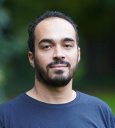
 Aiham Taleb
· 6 previous affiliations
- Amazon (United States)Since 2022
- Senior Applied Scientist - Generative AI · Since 2025
- Applied Scientist - Generative AI · 2022–2025
- Amazon (Germany)Current
- Current
- Researcher · 2022–2025
- Hasso Plattner Institute2018–2022
- Research Assistant & PhD Candidate · 2018–2022
- SAP2015–2019
- Research Associate · 2019
- Data Scientist · 2017–2018
- Software Engineer / Data Scientist · 2015–2017
- Software Development Intern · 2015
- Technical University of Munich2013–2015
- Master’s Degree, Computer Science · 2013–2015
Research Overview
Aiham Taleb focuses on self-supervised learning and multimodal representation learning for medical image analysis. His trajectory spans the development of 3D contrastive methods and the integration of genetic data with clinical imaging to reduce annotation bottlenecks. Most recently, his work addresses interpretable deep learning architectures and multiple instance learning for weakly supervised medical diagnostics.
Research Trajectory
Taleb's early work addresses the high cost of expert annotation in clinical domains by adapting self-supervised learning techniques to volumetric data. In 2020, he introduced 3D Self-Supervised Methods for Medical Imaging, proposing 3D proxy tasks—such as contrastive predictive coding, rotation prediction, and jigsaw puzzles—to facilitate feature learning from unlabeled 3D scans. Building on this foundation, he collaborated on Self-Supervised Learning for 3D Medical Image Analysis using 3D SimCLR and Monte Carlo Dropout in 2021. This research extended contrastive methods to 3D medical segmentation tasks, including brain and pancreas tumor detection, demonstrating that incorporating Bayesian neural networks during inference further enhances downstream performance.
Recognizing that clinical diagnostics inherently rely on diverse data sources, Taleb expanded his focus to multimodal representations. In Multimodal Self-supervised Learning for Medical Image Analysis, he developed a "multimodal puzzle" task that learns modality-agnostic representations by confusing image modalities at the data level. This approach utilized the Sinkhorn operator to frame the optimization as permutation matrix inference rather than standard classification. This multimodal approach culminated in the 2022 development of ContIG: Self-supervised Multimodal Contrastive Learning for Medical Imaging with Genetics. Here, he designed an end-to-end architecture to align medical images with various genetic modalities in a shared feature space using a contrastive loss, specifically accommodating missing modalities across individuals.
Concurrently, Taleb contributed to the broader area of Interpretable Architectures for Medical Image Diagnosis. He participated in the development of Interpretable and Interactive Deep Multiple Instance Learning for Dental Caries Classification in Bitewing X-rays. This work intersects with several research directions, including Multiple Instance Learning for Weakly Supervised Medical Imaging and Attention Based Multiple Instance Learning. The proposed architecture outputs heatmaps of local patch probabilities from weak image-level labels, allowing clinicians to interact with the model and guiding training via segmentation labels. This methodology aligns with his broader interest in the research direction of Designing Neural Networks for Intrinsic and Faithful Interpretability, the area of Direct Supervision of Neural Attention Maps, and work in Bidirectional Feedback Loops for Expert-Guided Medical AI.
Current Directions
The most recent papers in the evidence, from 2022, indicate a dual focus on scaling multimodal self-supervised learning and improving the interpretability of clinical AI. Taleb investigates how to effectively fuse heterogeneous data types—such as pairing radiological imaging with genetic profiles—to overcome annotation bottlenecks in specialized medical domains. Simultaneously, his recent collaborative work addresses the need for transparency in clinical decision-making. By leveraging weakly supervised techniques, this research explores how models can generate faithful, interactive explanations, allowing medical professionals to guide and interpret neural network attention maps directly.
Profile updated
Loading new papers…
Other researchers whose papers cluster into the same research directions — a proxy for overlapping technical interests and shared intellectual neighborhoods.
See something wrong? Report a mistake