

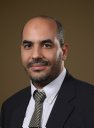
 Ahmed Abdelali
· 3 previous affiliations
- HumainSince 2025
- Principal Researcher · Since 2025
- Saudi Data and AI Authority2023–2025
- Principal Researcher · 2023–2025
- Qatar Computing Research Institute2013–2023
- Researcher · 2013–2023
Research Overview
Ahmed Abdelali focuses on Arabic natural language processing (NLP), machine translation, and the development of large-scale multilingual computational resources. His work addresses the unique linguistic challenges of the Arabic language, including its complex morphology, dialectal variations, and the prevalence of code-switching in multilingual societies. Over a career spanning two decades, his research has evolved from early statistical methods for cross-language information retrieval to the development and interpretability of modern transformer-based large language models (LLMs).
Research Trajectory
The early phase of Abdelali’s research, beginning in the mid-2000s, was centered on cross-language information retrieval (CLIR) and the use of latent semantic spaces to bridge linguistic divides. During this period, he investigated methods for identifying similar documents across languages without relying solely on direct translation. This work often utilized techniques like Latent Semantic Analysis (LSA) and multi-way array decompositions to cluster documents language-independently, ensuring that semantically related content remained proximal in a shared vector space regardless of the source language.
By the mid-2010s, Abdelali’s focus shifted toward the burgeoning field of neural machine translation (NMT) and the specific structural requirements of Arabic text processing. He contributed to research on Resolving Lexical Ambiguity from Orthographic Underspecification, particularly the problem of diacritization in Arabic, where the omission of short vowels creates significant lexical ambiguity. His work in this era also addressed domain adaptation in neural networks, exploring how models could be regularized to prioritize in-domain data while maintaining performance on broader datasets. This period marked a transition from general information retrieval to more granular linguistic tasks, including Global Sequence Optimization with BiLSTM-CRF Architectures for part-of-speech tagging and morphological segmentation.
In the late 2010s and early 2020s, Abdelali expanded his scope to include the creation of specialized corpora and benchmarking tools for dialectal Arabic. Recognizing that Modern Standard Arabic (MSA) often differs significantly from spoken dialects, he participated in efforts to build evaluation suites like AraBench to track progress in low-resource dialectal machine translation. He also led the development of the WAW Corpus, a unique resource of interpreted speeches that allows for the study of human interpreting processes and the training of simultaneous translation systems.
Most recently, his work has entered the era of large language models, focusing on both the development of bilingual (Arabic-English) LLMs and the interpretability of their internal representations. This includes probing how transformer models encode morphological and dialectal information and investigating the degree of alignment in shared cross-lingual spaces. His recent contributions also address safety and reliability in LLMs, specifically Contextual Reasoning for Implicit Toxicity Detection and identifying hallucinations in sensitive domains such as religious texts.
Current Directions
Abdelali’s current research is characterized by three primary pillars: the refinement of Arabic-centric LLMs, the study of multilingual model alignment, and the detection of adversarial or harmful content.
A significant portion of his recent work involves the "ALLaM" series of models, which aim to bridge the performance gap between Arabic and English capabilities through strategic vocabulary expansion and balanced data mixtures. Parallel to model development, he is active in the field of interpretability, using clustering and layer-wise analysis to understand how latent concepts are organized within multilingual embeddings. This research seeks to quantify the "overlap" between languages in a model's internal space, providing a more rigorous foundation for cross-lingual transfer learning.
Furthermore, Abdelali is increasingly focused on the challenges of Adversarial Linguistic Evasion in Content Moderation. As AI systems are deployed in complex social environments, his work examines how models can be made robust against techniques designed to bypass safety filters. This extends to specialized tasks such as Learning Code-Switched Speech from Monolingual Data and developing Theory Driven Synthetic Data for Code Switched NLP, ensuring that technologies remain effective for bilingual populations who fluidly mix languages in daily communication.
Representative Work
Cross-language information retrieval using PARAFAC2 In this senior-authored work from 2007, Abdelali addresses the limitations of standard Latent Semantic Analysis for multilingual document clustering. The paper proposes the use of the PARAFAC2 factor analysis model to create a language-independent semantic space. This approach allows documents about similar topics to be clustered together regardless of their language, overcoming the tendency of traditional LSA to group documents primarily by language rather than content.
Highly Effective Arabic Diacritization using Sequence to Sequence Modeling As a second author, Abdelali contributed to this 2019 study on Arabic diacritization, a critical task for reducing ambiguity in Arabic text. The research utilizes sequence-to-sequence models to automatically insert diacritics into "clean" text. The model achieved significant improvements over previous baselines, demonstrating the efficacy of neural architectures for handling the structural complexities of the Arabic writing system.
The WAW Corpus: The First Corpus of Interpreted Speeches and Their Translations for English and Arabic As the lead author of this 2021 article, Abdelali introduced the WAW Corpus, a comprehensive resource for English-Arabic interpreting studies. The corpus includes recordings of international conference speeches, their live interpretations, transcripts, and human translations. This work provides a foundational dataset for training machine translation systems and studying the linguistic nuances of human interpreters, such as "décalage" (the time delay between speaker and interpreter).
Interpreting Arabic Transformer Models In this 2022 first-authored paper, Abdelali probes the internal representations of various Arabic-centric transformer models. By performing layer and neuron-level analysis, the research investigates how linguistic information—such as morphology, part-of-speech, and dialectal identity—is encoded within these models. This work provides insights into how different training data (MSA vs. dialectal) affects the internal "knowledge" of the model.
Exploring Alignment in Shared Cross-lingual Spaces Serving as senior author, Abdelali presented this 2024 study on the degree of alignment in multilingual embeddings. The paper introduces two new metrics, CALIGN and COLAP, to quantify how well different languages overlap within the latent space of models like mT5 and mBERT. The findings offer a deeper understanding of how multilingual models capture (or fail to capture) linguistic nuances across diverse language pairs.
HUMAIN at IslamicEval 2025 Shared Task 1: A Three-Stage LLM-Based Pipeline for Detecting and Correcting Hallucinations in Quran and Hadith In this recent collaborative work, Abdelali participated in the development of a pipeline for detecting and correcting hallucinations in LLM-generated religious content. The system employs a three-stage process involving span detection, validation against reference corpora, and semantic re-ranking for correction. The study highlights the ongoing challenge of ensuring factual accuracy in specialized and sensitive domains within Arabic NLP.
Profile updated
Loading new papers…
Other researchers whose papers cluster into the same research directions — a proxy for overlapping technical interests and shared intellectual neighborhoods.
See something wrong? Report a mistake