

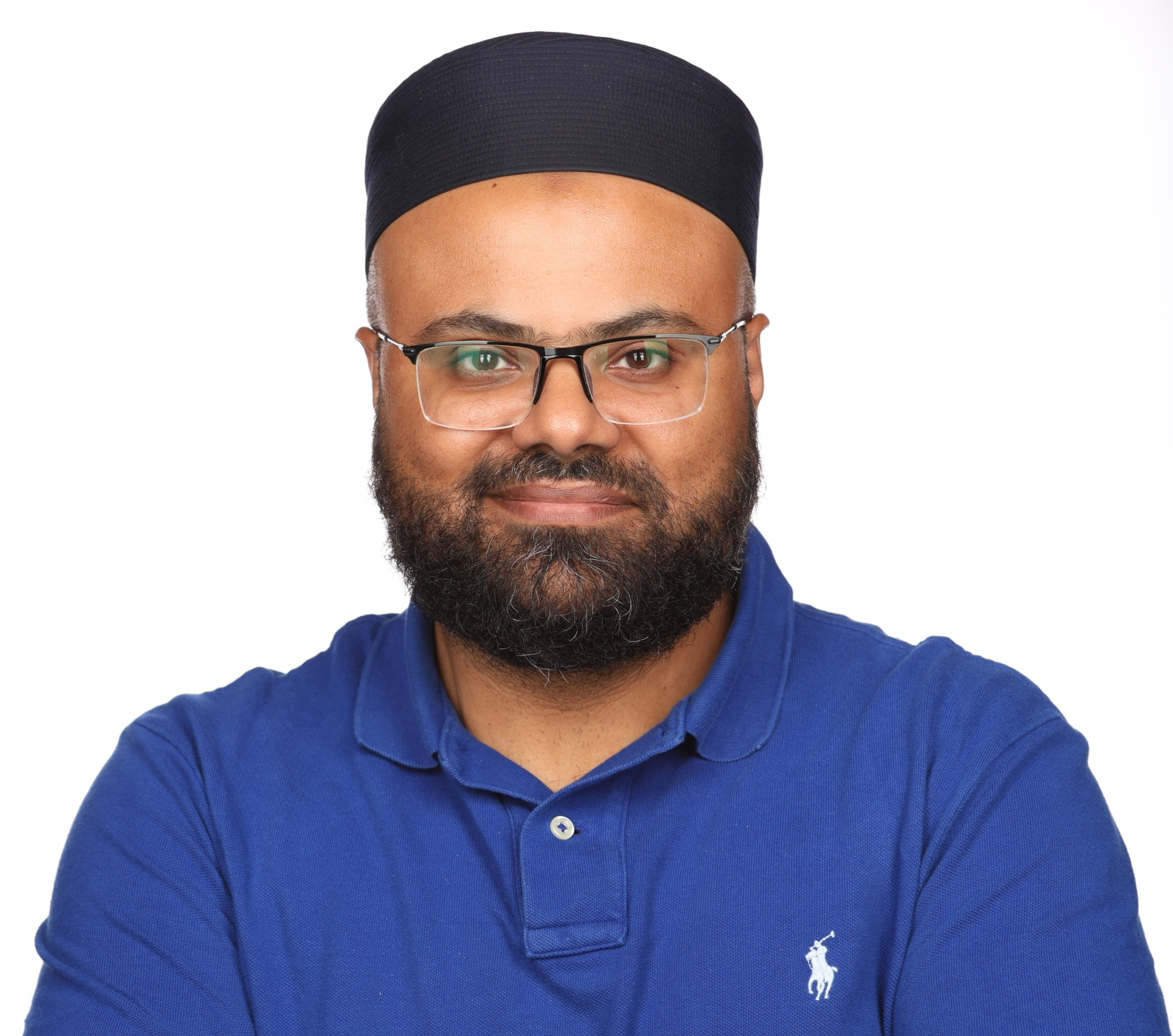
 Ahmad Rashid
· 4 previous affiliations
- University of WaterlooSince 2021
- PhD student · Since 2021
- Huawei Technologies (China)2018–2023
- Machine Learning Research Engineer · 2018–2023
- Sensibill2016–2017
- Machine Learning Developer · 2016–2017
- McGill University2013–2015
- MS student · 2013–2015
Research Overview
Ahmad Rashid focuses on the alignment and post-training of large language models, alongside the development of reliable and efficient machine learning algorithms. His early trajectory emphasized model compression and knowledge distillation for natural language processing, exploring structural efficiency without massive parameter scaling. Recently, his work centers on inference-time approaches for reward-guided text generation and steering model behavior under compute constraints.
Research Trajectory
The early phase of his research focused heavily on model compression and reducing the computational burden of natural language processing architectures. In 2019, he introduced Distilled embedding: non-linear embedding factorization using knowledge distillation, a streamlined approach that combined matrix factorization with non-linear activations and knowledge distillation. This method successfully shrank the memory footprint of NLP models without the complexity of prior techniques, contributing to the broader research direction of Compressing the Embedding Layer Memory Bottleneck.
By 2021, his focus expanded to the robustness, efficiency, and benchmarking of knowledge distillation (KD) methods. He developed MATE-KD: Masked Adversarial TExt, a Companion to Knowledge Distillation, which utilized adversarial data augmentation to improve model training. Recognizing the fragmented landscape of KD evaluation, he conducted a rigorous empirical study in How to Select One Among All ? An Empirical Study Towards the Robustness of Knowledge Distillation in Natural Language Understanding. This work provided a fair benchmarking framework and introduced ComKD, a hybrid algorithm combining adversarial data augmentation with progressive learning schedules. These contributions advanced the areas of Knowledge Distillation for Generative Natural Language Processing and Initializing Student Networks with Pretrained Teacher Weights. During this period, he also explored data-free approaches in Towards Zero-Shot Knowledge Distillation for Natural Language Processing, contributing to the area of Differentiable Optimization of Discrete Text Tokens.
Moving into 2022, he participated in research adapting computer vision techniques to language models. He collaborated on Improving Generalization of Pre-trained Language Models via Stochastic Weight Averaging, demonstrating that simply averaging model weights during the final stages of fine-tuning yields flatter loss minima and better generalization with virtually no extra computational overhead. This aligned with the broader direction of Training Efficient Models Without Large Teacher Supervision. He also contributed to Kronecker Decomposition for GPT Compression, advancing the area of Kronecker Product Factorization for Parameter Efficient Networks. Further exploring regularization, he helped devise a two-stage optimization problem for instance-specific label smoothing in Pseudo Knowledge Distillation: Towards Learning Optimal Instance-specific Label Smoothing Regularization, which provided a deterministic and interpretable solution for optimal label smoothing.
In 2023, he continued to refine label regularization techniques with LABO: Towards Learning Optimal Label Regularization via Bi-level Optimization. He also investigated dialogue systems, developing methods for Attribute Controlled Dialogue Prompting. Concurrently, he addressed the reliability of discriminative neural networks in Preventing Arbitrarily High Confidence on Far-Away Data in Point-Estimated Discriminative Neural Networks. This work tackled the persistent issue where deterministic networks, such as ReLU architectures, yield overconfident predictions on out-of-distribution (OOD) data. The proposed solution introduced an extra rejection class logit designed to dominate the original classes as data moves away from the training distribution.
By 2025, his research shifted toward the efficient alignment of large language models. He introduced FaRMA in Towards Cost-Effective Reward Guided Text Generation, a method that enables a reward model to score all possible next tokens in a single forward pass. By utilizing a training constraint based on temporal difference learning, FaRMA guides partial sequences toward optimal full-sentence outcomes, achieving significant speedups over existing methods while matching the performance of expensive reinforcement learning techniques. He further examined these mechanisms in A Critical Look At Tokenwise Reward-Guided Text Generation, proposing a method to explicitly train reward models on partial sequences. This approach successfully aligns models with human preferences while keeping the underlying language model frozen, avoiding the prohibitive costs of full fine-tuning.
Current Directions
The most recent papers in the evidence address the post-training and alignment of large language models, specifically focusing on inference-time approaches. Rather than relying on costly full-model fine-tuning or frontier-scale compute, recent work investigates how to steer model behavior efficiently using reward-guided text generation. This includes developing methods to train reward models on partial sequences and optimizing the scoring of next tokens in a single forward pass to achieve reinforcement-learning-level performance at a fraction of the computational cost. A parallel theme in recent years involves improving the reliability of machine learning algorithms, particularly in designing structural network modifications that prevent overconfidence in out-of-distribution scenarios.
Profile updated
| Paper | Venue | Year |
|---|---|---|
| Towards Cost-Effective Reward Guided Text GenerationGitHubahmadrash/ | ICML | 2025 |
Loading new papers…
Other researchers whose papers cluster into the same research directions — a proxy for overlapping technical interests and shared intellectual neighborhoods.
See something wrong? Report a mistake