

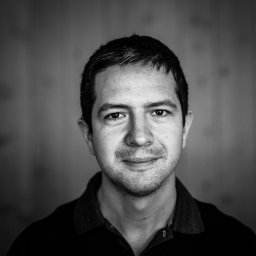
 Adrian V Dalca
· 5 previous affiliations
- Harvard Medical SchoolSince 2017
- Assistant Professor · Since 2020
- Instructor (Junior Faculty) · 2019
- Postdoctoral Research Fellow · 2017–2019
- Harvard UniversitySince 2016
- Assistant Professor · Since 2020
- Postdoc · 2016–2019
- Massachusetts Institute of TechnologySince 2016
- Research Scientist · Since 2020
- Research Affiliate · 2019
- Postdoc · 2017–2019
- PhD student · 2016
- S.M., Computer Science (Machine Learning, Computer Vision, Medical Image Analysis) · 2012
- Massachusetts General Hospital2017–2019
- Postdoctoral Research Fellow · 2017–2019
- University of Toronto2006–2009
- Research Assistant (BSc, MSc Student) · 2006–2009
Research Overview
Adrian V Dalca focuses on medical image registration, generalist medical AI, and modality-agnostic learning through randomized image synthesis. His trajectory spans from early work in genomic sequence alignment to the development of foundational deep learning frameworks for fast, diffeomorphic image registration and robust segmentation. His current research investigates universal medical image segmentation, in-context learning for biomedical domains, and unified brain surface and volume registration.
Research Trajectory
Dalca's early research involved high-performance sequence alignment. With collaborators, he developed SHRiMP: Accurate Mapping of Short Color-space Reads (2009), a specialized tool utilizing spaced seeds and vectorized Smith-Waterman algorithms to map highly divergent short DNA reads to reference genomes.
Transitioning to medical image analysis, his work fundamentally advanced the area of Real-Time Volumetric Image Registration via Deep Learning. He introduced an Unsupervised Learning for Fast Probabilistic Diffeomorphic Registration (2018) framework that achieved sub-second runtimes while providing explicit maps of registration uncertainty. This foundation led to VoxelMorph: A Learning Framework for Deformable Medical Image Registration. (2019), which accelerated deformable registration by learning a general function across image pairs rather than optimizing them individually. These contributions heavily influenced the broader research direction of Amortized Optimization for Real-Time Deformable Image Registration and established new methods in the area of Diffeomorphic Constraints for Physically Plausible Image Registration.
To address the variability of clinical scans, Dalca's research expanded into the direction of Modality-Agnostic Learning through Randomized Image Synthesis. He developed SynthMorph: Learning Contrast-Invariant Registration Without Acquired Images (2022), a framework that learns to register diverse MRI contrasts without relying on real-world training data. This synthetic data approach was similarly applied to segmentation in SynthSeg: Segmentation of brain MRI scans of any contrast and resolution without retraining (2023), demonstrating stable performance across diverse datasets and contributing to the area of Robust Deep Learning for Heterogeneous Medical Imaging.
Building on these robust models, his focus shifted toward the area of Generalist Medical AI via Multimodal Foundation Models. He introduced UniverSeg: Universal Medical Image Segmentation (2023), a model capable of generalizing to unseen anatomies and modalities without retraining. This was followed by interactive and in-context learning frameworks, including ScribblePrompt: Fast and Flexible Interactive Segmentation for Any Biomedical Image (2024), which enables high-performance segmentation via user scribbles and clicks, and Tyche: Stochastic in-Context Learning for Medical Image Segmentation (2024), which captures inter-rater ambiguity by generating multiple plausible predictions from a small context set. He further optimized interactive labeling efficiency with MultiverSeg: Scalable Interactive Segmentation of Biomedical Imaging Datasets with In-Context Guidance (2024). Concurrently, he investigated foundational network properties in Magnitude Invariant Parametrizations Improve Hypernetwork Learning (2024).
In 2025, Dalca's work addressed complex, multi-protocol segmentation and dynamic atlas generation. He developed AtlasMorph: Learning conditional deformable templates for brain MRI to generate anatomical templates that adapt to sub-populations based on attributes like age and sex. He also introduced MultiMorph: On-demand Atlas Construction, enabling the rapid generation of population-specific brain atlases using synthetic data and group-communication layers. To improve segmentation across structurally related images, he proposed InterConv: Set Interaction for Improved Biomedical Image Segmentation, introducing a layer that facilitates information sharing across intermediate sample features. His research on handling diverse clinical protocols includes Pancakes: Consistent Multi-Protocol Image Segmentation Across Biomedical Domains and participation in the development of Deep infant brain segmentation from multi-contrast MRI, a framework utilizing group convolutions and domain randomization for pediatric neuroimaging.
Most recently, his work explores multimodal alignment and unified anatomical modeling. He participated in GEMCONT: Genetics-based Multimodal Contrastive Learning for Disease-Focused Imaging Genetics (2026), which aligns genotype and phenotype representations to extract risk-related features. He also developed Unified Brain Surface and Volume Registration (2026), a framework that couples 3D volumetric and 2D spherical networks to simultaneously align the brain's cortex and subcortical structures.
Current Directions
The most recent papers in the evidence address the integration of diverse biomedical data modalities and the development of highly adaptable anatomical models. Recent work investigates unified frameworks capable of simultaneously registering complex structures, such as coupling 3D volumetric and 2D spherical networks for brain surface and volume alignment. Additionally, current research explores multimodal contrastive learning to align genetic variations with quantitative imaging phenotypes. Dalca is also focused on multi-protocol image segmentation and the on-demand construction of population-specific atlases, utilizing set-interaction mechanisms and conditional templates to better capture real-world biological variability across diverse clinical environments.
Profile updated
Loading new papers…
Other researchers whose papers cluster into the same research directions — a proxy for overlapping technical interests and shared intellectual neighborhoods.
See something wrong? Report a mistake