

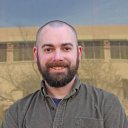
 Adam Thorpe
· 2 previous affiliations
- The University of Texas at AustinSince 2024
- Postdoc · Since 2024
- University of New Mexico2017–2023
- PhD student · 2017–2023
Research Overview
Adam Thorpe focuses on data-driven control, stochastic reachability, and the application of kernel methods to complex dynamical systems. His early work established foundational techniques for optimal control and safety verification using Hilbert space embeddings, while his recent research investigates transfer learning, neural ordinary differential equations, and formal verification for autonomous systems.
Research Trajectory
The early arc of Thorpe’s research concentrated on bypassing the need for explicit mathematical models in complex stochastic systems by leveraging reproducing kernel Hilbert spaces (RKHS). In 2020, he introduced Model-Free Stochastic Reachability Using Kernel Distribution Embeddings, a data-driven approach that avoided intractable integrals to enable the efficient verification of systems with unknown or nonlinear dynamics. He expanded on this foundation the following year with Stochastic Optimal Control via Hilbert Space Embeddings of Distributions, demonstrating how complex optimization problems could be transformed into solvable linear programs directly from observed system behavior.
By 2022, his work on kernel methods had matured into a robust suite of tools for control and safety. He developed Data-Driven Stochastic Optimal Control Using Kernel Gradients, which utilized the reproducing property of kernels to compute gradients of unknown cost surfaces, allowing optimal control actions to be found via standard gradient descent. Recognizing the critical need for safety in autonomous systems, he also derived state- and input-dependent safety margins in State-based confidence bounds for data-driven stochastic reachability using Hilbert space embeddings. To make these methods accessible to the broader community, he released SOCKS: A Stochastic Optimal Control and Reachability Toolbox Using Kernel Methods, providing a flexible framework for tackling arbitrary cost functions without explicit system models. Further extending these probabilistic frameworks, he presented Data-Driven Chance Constrained Control using Kernel Distribution Embeddings, an algorithmic approach for computing policies for joint chance-constrained problems, which contributed to the broader area of Statistical Inference via Hilbert Space Distribution Embeddings.
In 2023, Thorpe’s research expanded to include the automated discovery of governing equations from observational data. Working on the challenge of sparse and noisy measurements, he collaborated on GPSINDy: Data-Driven Discovery of Equations of Motion. This method combined Gaussian process regression with sparse identification techniques to denoise data and identify nonlinear dynamics, advancing the research direction of Robust Symbolic Regression for Scientific Discovery and addressing bottlenecks in the area of Scaling Gaussian Processes Beyond Cubic Complexity. He later bridged his expertise in kernel methods with physical priors, introducing Physics-Informed Kernel Embeddings: Integrating Prior System Knowledge with Data-Driven Control to significantly improve sample efficiency in real-world applications where data is scarce.
Expanding his focus to human-in-the-loop systems and continuous-time models, Thorpe oversaw research into how cognitive states affect driving performance in Characterizing the Effect of Mind Wandering on Braking Dynamics in Partially Autonomous Vehicles. This investigation aligns with the research area of Modeling Heterogeneous Driving Styles in Autonomous Navigation. In parallel, he contributed to the area of Neural Ordinary Differential Equations for Continuous Physical Dynamics. With collaborators, he developed Zero-Shot Transfer of Neural ODEs, a framework that learns a basis of dynamics functions to allow autonomous systems—such as drones carrying unexpected payloads—to adapt to new environments in real-time without retraining.
Most recently, in 2025, Thorpe has investigated the mathematical foundations of transfer learning and formal verification. He co-authored Function Encoders: A Principled Approach to Transfer Learning in Hilbert Spaces, which categorizes transfer into geometric types and introduces a method that outperforms traditional meta-learning on diverse benchmarks. He also led the comprehensive ARCH-COMP25 Category Report: Stochastic Models, evaluating the state-of-the-art in policy synthesis and highlighting advancements in the direction of Massively Parallel Tensorized Neural Network Verification to address high-dimensional state spaces. Continuing his work on real-time adaptation, he participated in the development of Online Adaptation of Terrain-Aware Dynamics for Planning in Unstructured Environments, enabling legged robots to rapidly adjust their control strategies on unseen terrains using flexible underlying dynamics patterns.
Current Directions
Recent work investigates the mathematical foundations of transfer learning and the real-time adaptation of robotic systems in unstructured environments. The most recent papers in the evidence address how tasks can be modeled geometrically within Hilbert spaces to enable zero-shot or few-shot transfer, providing a rigorous alternative to standard transformer or meta-learning architectures. Additionally, ongoing research focuses on formal verification for stochastic models and the online adaptation of terrain-aware dynamics, allowing autonomous agents to safely navigate, plan, and update their internal models when encountering novel physical conditions without the need for extensive retraining.
Profile updated
| Paper | Venue | Year |
|---|---|---|
| Zero-Shot Transfer of Neural ODEsGitHubtyler-ingebrand/ | NeurIPS | 2024 |
Loading new papers…
Other researchers whose papers cluster into the same research directions — a proxy for overlapping technical interests and shared intellectual neighborhoods.
See something wrong? Report a mistake