

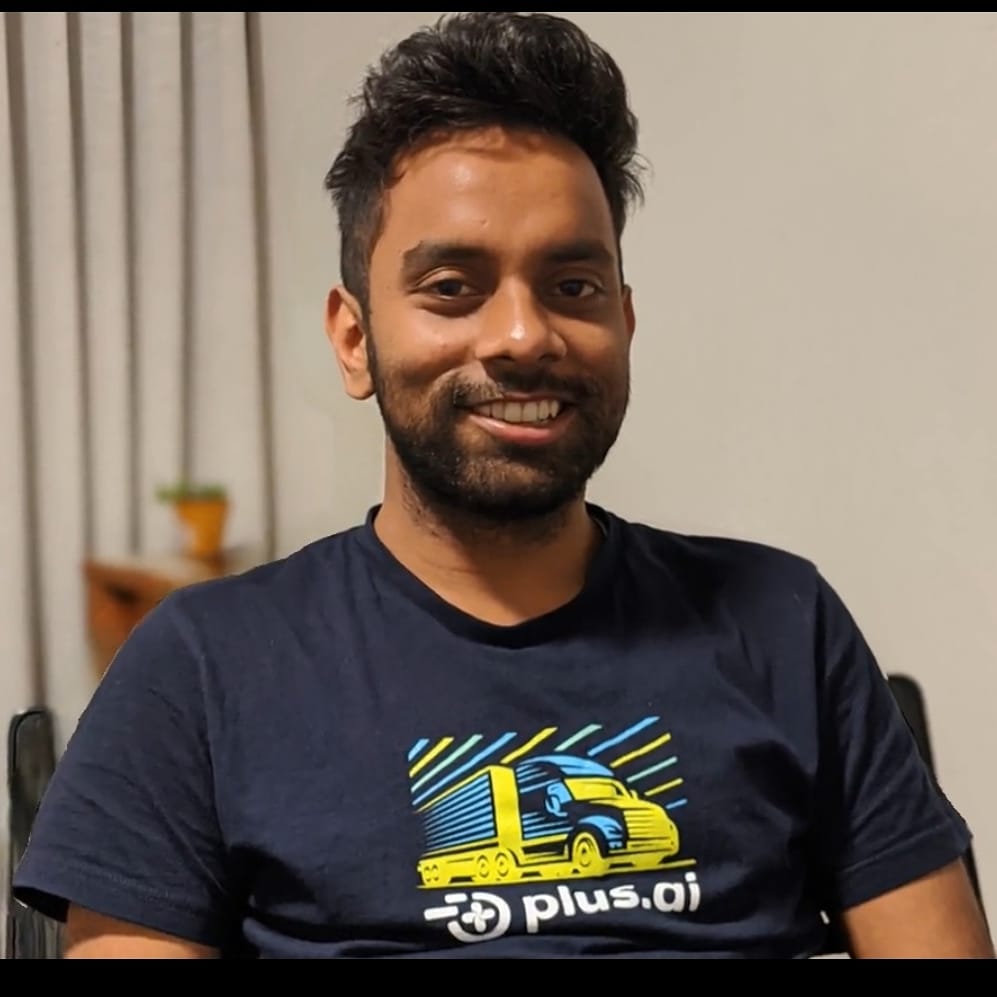
 Abhishek Sinha
· 6 previous affiliations
- Google DeepMind (United Kingdom)Since 2025
- Staff Software Engineer · Since 2026
- Senior Software Engineer · 2025–2026
- Google (United States)2024–2025
- Senior Software Engineer · 2024–2025
- waymo2020–2024
- Senior Software Engineer · 2023–2024
- Software Engineer 3 · 2022–2023
- Researcher · 2021
- Perception Research and Development Intern · 2020
- Stanford University2019–2021
- MS student · 2019–2021
- Research Assistant · 2019
- Adobe Systems (United States)2017–2019
- Member of Technical Staff-2 · 2017–2019
- B.Tech, Electrical and Electronics Engineering · 2013–2017
1 other author named Abhishek Sinha: Abhishek Sinha (Tata Institute of Fundamental Research · 68 papers)
Research Overview
Abhishek Sinha focuses on generative modeling, self-supervised representation learning, and the robustness of deep neural networks. His work explores the intersection of optimization theory and computer vision, with a particular emphasis on accelerating neural network training, measuring distributional discrepancies, and enhancing the reliability of latent representations. His recent research investigates the efficiency of generative processes, including Generative Denoising in Compressed Domains and the application of Generative Diffusion in Compressed Latent Spaces.
Research Trajectory
The evolution of Sinha’s research reflects a transition from fundamental optimization and multi-modal grounding toward the theoretical underpinnings of generative models and representation learning. In the early stages of his career (circa 2017), he addressed the computational bottlenecks of deep learning by developing meta-learning techniques to predict weight trajectories during training. This interest in the internal dynamics of neural networks expanded into the domain of multi-modal fusion, where he investigated how agents could ground natural language instructions in visual environments through attention mechanisms.
By 2019, Sinha’s focus shifted toward the security and robustness of machine learning systems. He conducted critical analyses of adversarially trained models, identifying specific vulnerabilities within latent layers that persisted despite input-level robustness. This period also saw significant contributions to visual retrieval systems, where he utilized information-rich embeddings to improve the accuracy of fashion-related search tasks. During this time, he also participated in research regarding Constrained Online Optimization Beyond Slater Conditions, exploring the constraints necessary for reliable reinforcement learning in real-world environments.
Starting in 2020, Sinha’s work became increasingly focused on the mathematical frameworks used to compare probability distributions and the development of novel data augmentation strategies. He introduced decision-theoretic discrepancy measures that generalize existing metrics like the Jensen-Shannon divergence, providing more powerful tools for two-sample testing. His work in 2021 and 2022 has centered on the "curse of dimensionality" in generative modeling, contributing to the shift toward Scaling From Class Conditional to Text to Image Generation and addressing the Aligning Latent Distributions in Variational Autoencoders. This trajectory demonstrates a consistent move toward more abstract and theoretically grounded approaches to high-dimensional data generation and representation.
Current Directions
Sinha’s current research is characterized by an effort to reconcile the efficiency of compressed latent spaces with the high-fidelity requirements of modern generative models. A primary area of focus is the refinement of denoising diffusion probabilistic models (DDPMs). By shifting the diffusion process from raw pixel space to compressed domains, his work aims to mitigate the prohibitive computational costs traditionally associated with iterative denoising. This involves not only architectural innovations but also a deeper understanding of how latent distributions can be aligned to prevent the "blurry" reconstructions often seen in standard variational frameworks.
Furthermore, he continues to explore the boundaries of self-supervised learning. His recent work investigates hybrid estimators for mutual information, attempting to combine the strengths of distribution-free contrastive methods with distribution-based autoencoder objectives. This approach seeks to capture fine-grained details, such as texture, which are often lost in purely contrastive representation learning. Additionally, Sinha maintains an interest in the temporal aspects of networked systems, including Max Age First Scheduling for Information Freshness, which examines how data utility decays over time in real-time control loops.
Representative Work
In Introspection:Accelerating Neural Network Training By Learning Weight Evolution, Sinha introduced a meta-learning framework designed to reduce the time required to train deep architectures. The core of this approach is an auxiliary "Introspection" network that learns the underlying "physics" of weight updates. By observing the initial stages of training, this model predicts future weight values, allowing the primary network to "jump" forward in the optimization landscape. This method demonstrated significant convergence speedups on large-scale datasets like ImageNet without sacrificing final accuracy.
Addressing the limitations of current defense mechanisms, Harnessing the Vulnerability of Latent Layers in Adversarially Trained Models provides a rigorous analysis of the internal robustness of neural networks. Sinha demonstrated that while adversarial training may secure the input layer, the latent layers remain highly susceptible to small-magnitude perturbations. This finding led to the development of "Latent Adversarial Training," a technique that extends robustness guarantees deeper into the network architecture, ensuring that the internal representations themselves are resistant to manipulation.
In the domain of multi-modal interaction, Attention Based Natural Language Grounding by Navigating Virtual Environment details the development of an agent capable of following complex textual instructions within 2D and 3D simulations. Sinha proposed a novel attention mechanism for the fusion of visual and textual data, enabling the agent to identify and navigate toward target objects more effectively than previous end-to-end models. This work highlighted the importance of selective focus in grounding language within high-dimensional visual streams.
Sinha’s work on Negative Data Augmentation (NDA) challenged the standard practice of only using in-distribution synthetic samples. He proposed that intentionally creating out-of-distribution (OOD) samples can provide critical information about the boundaries of the data distribution support. By incorporating these "negative" samples into a GAN training objective, he proved that the discriminator could more effectively guide the generator toward the true data manifold. This technique has implications for both generative fidelity and the robustness of representation learning.
In Hybrid Mutual Information Lower-bound Estimators for Representation Learning, Sinha addressed the variance-bias tradeoff in self-supervised learning. While contrastive methods are effective for downstream classification, they often fail to capture low-level structural information. By integrating a distribution-based autoencoder lower bound with a distribution-free contrastive bound, Sinha developed a hybrid estimator that retains the discriminative power of contrastive learning while improving the model's ability to represent complex textures and local features.
Finally, Comparing Distributions by Measuring Differences that Affect Decision Making introduced a new class of discrepancy measures based on optimal decision loss. Sinha argued that two distributions should be considered different if the loss incurred in a decision task is higher when the distributions are mixed than when they are treated individually. This decision-theoretic approach generalizes the Maximum Mean Discrepancy (MMD) and provides a flexible framework for two-sample testing, allowing practitioners to weight different types of distributional differences based on their specific application requirements.
Profile updated
| Paper | Venue | Year |
|---|---|---|
| D2C: Diffusion-Decoding Models for Few-Shot Conditional GenerationGitHubjiamings/ | NeurIPS | 2021 |
Loading new papers…
Other researchers whose papers cluster into the same research directions — a proxy for overlapping technical interests and shared intellectual neighborhoods.
See something wrong? Report a mistake