

 Authors
Export
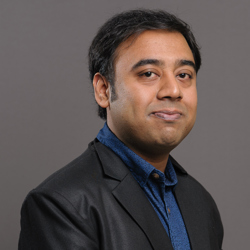
Abhirup Banerjee
· 3 previous affiliations
- University of OxfordSince 2017
- The Royal Society University Research Fellow · Since 2022
- Postdoctoral Researcher · 2017–2022
- Stipendiary Lecturer · 2020
- Principal Investigator - Data Study Group Challenge · 2021
- Indian Statistical Institute2009–2017
- Doctor of Philosophy - PhD, Computer Science · 2011–2017
- Master's degree, Statistics · 2009–2011
Research Overview
Abhirup Banerjee focuses on medical image analysis, quantitative imaging biomarkers, and adversarial machine learning. Early collaborative work involved benchmarking artificial intelligence models for airway modeling in pulmonary fibrosis and exploring joint learning for multi-modal MRI segmentation. More recently, the research trajectory has expanded to address data fusion and the security of intelligent systems through adversarial machine learning.
Research Trajectory
The available evidence for Abhirup Banerjee’s research trajectory spans from 2023 to 2025, reflecting participation in large-scale medical imaging challenges and a subsequent senior role in adversarial machine learning research. Because the corpus of linked work is relatively sparse, this trajectory highlights a selection of collaborative and leadership contributions rather than an exhaustive publication history.
In 2023 and 2024, Banerjee participated as a contributing middle author in extensive multi-institutional efforts focused on medical image segmentation and biomarker discovery. This included the benchmarking study Hunting imaging biomarkers in pulmonary fibrosis: Benchmarks of the AIIB23 challenge, which evaluated the capacity of artificial intelligence models to delineate airway trees in patients with fibrotic lung disease. The project addressed the difficulties of modeling intricate honeycombing patterns in unharmonized, noisy data, ultimately identifying new quantitative CT imaging biomarkers for mortality prediction that outperformed existing clinical measurements like forced vital capacity (FVC).
During this period, Banerjee also contributed to research on multi-modal brain imaging. The paper Feasibility and benefits of joint learning from MRI databases with different brain diseases and modalities for segmentation explored whether models could be effectively trained across multiple databases containing varying sets of MRI modalities and pathology annotations. This work demonstrated the potential of joint learning to improve segmentation performance across diverse clinical datasets, enabling the analysis of new databases with different sets of modalities and brain diseases.
By 2025, the focus of Banerjee's documented work shifted toward the security and robustness of artificial intelligence systems. Serving as the senior author, Banerjee led an investigation into New trends of adversarial machine learning for data fusion and intelligent system. This work marks a transition from applied medical image analysis to foundational challenges in machine learning, specifically addressing how adversarial techniques impact data fusion processes and the broader reliability of intelligent systems.
Current Directions
Based on the most recent paper in the evidence from 2025, Banerjee's current research investigates adversarial machine learning and its intersection with data fusion. This direction focuses on the vulnerabilities and defense mechanisms inherent in intelligent systems that integrate multiple data sources. Rather than concentrating solely on clinical imaging applications, this recent work addresses broader methodological challenges in ensuring the robustness, security, and reliability of complex machine learning pipelines.
Profile updated
Loading new papers…
Other researchers whose papers cluster into the same research directions — a proxy for overlapping technical interests and shared intellectual neighborhoods.
See something wrong? Report a mistake