

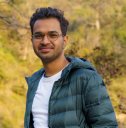
 Abdul Fatir Ansari
· 5 previous affiliations
- Amazon (Germany)Since 2022
- Senior Scientist · Since 2024
- Scientist · 2022–2024
- Amazon (United States)Since 2020
- Senior Applied Scientist · Since 2024
- Current
- Applied Scientist II · 2022–2024
- Applied Science Intern · 2020–2021
- National University of Singapore2017–2022
- PhD student · 2017–2022
- Graduate Teaching Assistant · 2018–2020
- Bachelor of Technology, Civil Engineering · 2013–2017
- GSoC Contributor at Computational Biology @ University of Nebraska-Lincoln · 2016
Research Overview
Abdul Fatir Ansari focuses on time series analysis and probabilistic generative modeling, with an emphasis on representation learning and unsupervised methods. His early work explored latent space disentanglement and implicit generative models before shifting toward sequential data and continuous-discrete dynamics. Currently, he develops large-scale foundation models for universal time series forecasting that handle multivariate dependencies and exogenous covariates.
Research Trajectory
Ansari’s early research concentrated on probabilistic generative modeling, latent space representations, and the broader area of Hybrid Latent Spaces for Discrete and Continuous Disentanglement. He introduced a Bayesian approach to unsupervised disentanglement in Hyperprior Induced Unsupervised Disentanglement of Latent Representations. By placing a hyperprior on the latent space's covariance matrix, this method improved disentanglement on datasets with correlated factors of variation, contributing to the area of Disentangled Representation Learning with Correlated Latent Factors. Continuing in generative modeling, he formulated the learning of implicit generative models as minimizing the expected distance between characteristic functions in A Characteristic Function Approach to Deep Implicit Generative Modeling. He subsequently developed techniques to refine generated samples using non-linear Fokker-Planck equations in Refining Deep Generative Models via Discriminator Gradient Flow.
Around this time, his focus expanded to sequential data and dynamical systems. To better understand complex time series subdivided into distinct regimes, he proposed the Recurrent Explicit Duration Switching Dynamical System in Deep Explicit Duration Switching Models for Time Series, a model capable of identifying both state- and time-dependent switching dynamics. He continued to bridge generative modeling and continuous dynamics by proposing a framework that uses Wasserstein gradient flows to transform noise into complex data in Generative Modeling with Flow-Guided Density Ratio Learning. Addressing the challenges of real-world sensor and clinical data, he also developed methods for handling sequences with missing or unevenly spaced observations in Neural Continuous-Discrete State Space Models for Irregularly-Sampled Time Series.
During his tenure as a Machine Learning Scientist at AWS AI, Ansari has been a key contributor to the development of foundation models for sequential data, advancing the research direction of Zero Shot Generalization in Time Series Foundation Models. This effort is anchored by Chronos: Learning the Language of Time Series, which tokenizes time series values into a fixed vocabulary to train transformer-based language models via cross-entropy loss. This approach also intersects with the area of Regression by Classification for Robust Distributional Estimation. Building on this paradigm, he collaborated on Enhancing Foundation Models for Time Series Forecasting via Wavelet-based Tokenization, which utilizes wavelets to discretize continuous data into time-localized frequency tokens, reducing vocabulary size while maintaining zero-shot forecasting performance.
To rigorously evaluate these emerging models, he led the creation of fev-bench: A Realistic Benchmark for Time Series Forecasting, a comprehensive suite of tasks designed to capture real-world complexities, thereby supporting work in the area of Modeling Cross-Variable Dependencies in Multivariate Time Series. The Chronos framework was subsequently expanded in Chronos-2: From Univariate to Universal Forecasting. This iteration introduced a group attention mechanism to handle multivariate and covariate-informed tasks in a zero-shot manner, advancing the direction of Fusing Exogenous Context into Spatio-Temporal Neural Networks. Further exploring the integration of external factors, he participated in the development of ChronosX: Adapting Pretrained Time Series Models with Exogenous Variables.
Most recently, his collaborative work has focused on the theoretical and structural properties of these architectures. Understanding the Implicit Biases of Design Choices for Time Series Foundation Models investigates how fundamental design decisions, such as patch size and loss functions, dictate model behavior and performance on chaotic versus smooth systems. Similarly, Understanding Transformers for Time Series: Rank Structure, Flow-of-ranks, and Compressibility demonstrates that time series embeddings are naturally low-rank, enabling significant model compression without sacrificing accuracy.
Current Directions
The most recent papers in the evidence indicate a strong focus on optimizing and understanding the theoretical underpinnings of time series foundation models. Recent work investigates the implicit biases introduced by architectural design choices—such as patch size, embedding strategies, and loss functions—and how these factors influence a model's ability to denoise trends or capture chaotic dynamics. Additionally, ongoing research addresses the structural properties of transformer architectures when applied to continuous signals, demonstrating that time series embeddings often exhibit a low-rank structure. This insight is being leveraged to achieve significant model compression, reducing memory footprints and accelerating inference without compromising forecasting accuracy. Finally, extending zero-shot forecasting capabilities to handle complex, real-world scenarios involving multivariate dependencies and exogenous covariates remains a central theme in his current research agenda.
Profile updated
Loading new papers…
Other researchers whose papers cluster into the same research directions — a proxy for overlapping technical interests and shared intellectual neighborhoods.
See something wrong? Report a mistake