

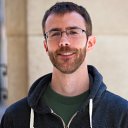
 Aaron Halfaker
1 previous affiliation
- University of Minnesota2006–2013
- PhD student · 2006–2013
Research Overview
Aaron Halfaker focuses on the socio-technical dynamics of online collaboration, participatory machine learning, and the governance of digital platforms. His trajectory spans foundational analyses of Wikipedia's community evolution to the design of AI-driven moderation and auditing tools. Most recently, his work investigates large language model applications for knowledge synthesis and the evaluation of complex reasoning systems.
Research Trajectory
Aaron Halfaker’s research initially concentrated on the socio-technical dynamics of peer production communities, with a particular focus on Wikipedia. His early collaborative work examined the lifecycle of contributors, investigating how highly active users emerge in Wikipedians are born, not made: a study of power editors on Wikipedia (2009). Recognizing the fragility of community retention, he subsequently analyzed how quality control mechanisms impact new contributors in Don't bite the newbies: how reverts affect the quantity and quality of Wikipedia work (2011). This interest in platform maintenance naturally extended to the role of automation, where he explored the interplay between human editors and algorithmic agents in Bots and Cyborgs: Wikipedia's Immune System (2012).
As his focus broadened to encompass the structural properties of digital networks, Halfaker investigated how physical proximity influences online interactions in Far from the eyes, close on the web: impact of geographic distance on online social interactions (2012). This work aligns with his broader contributions to the research direction of The Persistence of Geography in Digital Social Networks. During this period, his research also intersected with areas such as Small-World Topology in Complex Systems and Modularity Optimization for Discovering Latent System Structures. In 2014, he analyzed over seven million Wikipedia comments to uncover how gender and status shape communication styles in Emotions under Discussion: Gender, Status and Communication in Online Collaboration, advancing methodologies within the area of Topological Significance Testing via Network Randomization. He also developed robust techniques for behavioral analytics, demonstrating strong temporal rhythms across various online domains in User Session Identification Based on Strong Regularities in Inter-activity Time (2015), a period that also saw him contribute to the field of Stabilizing Stochastic Clustering via Ensemble Consensus.
A significant portion of Halfaker’s trajectory involves the design and evaluation of participatory machine learning systems and platform governance tools. He introduced an infrastructure for community-driven AI in ORES: Lowering Barriers with Participatory Machine Learning in Wikipedia (2020). Expanding on the potential of digital architectures to support public goods, he proposed new frameworks for technology-mediated social participation in Social Innovation Meets Social Media: A Framework Proposal (2021). His research extensively addresses knowledge equity; he analyzed the disproportionate engagement driven by local cultural context in The Role of Local Content in Wikipedia: A Study on Reader and Editor Engagement (2021), and helped develop interactive dashboards to identify systemic imbalances in The Wikipedia Diversity Observatory: helping communities to bridge content gaps through interactive interfaces (2021).
To further illuminate the hidden mechanisms of community consensus, Halfaker contributed to visual analytics platforms that map edit wars and discussions, transforming raw revision logs into intuitive heatmaps in A Platform for Visually Exploring the Development of Wikipedia Articles (2021). He continued this structural analysis by extracting interaction networks from discussion pages to understand how the shape of a debate changes across topics in When the Wikipedians Talk: Network and Tree Structure of Wikipedia Discussion Pages (2021). Addressing the consequences of automated moderation, he investigated how algorithmic flagging systems influence fairness and user profiling in Effects of Algorithmic Flagging on Fairness: Quasi-experimental Evidence from Wikipedia (2021), contributing to the broader research direction of The Challenge of Cross-Platform Behavioral Generalization.
In recent years, Halfaker’s work has shifted toward the application and auditing of large language models (LLMs) and complex reasoning systems. He evaluated dual-design approaches for AI-generated meeting recaps in Summaries, Highlights, and Action items: Design, implementation and evaluation of an LLM-powered meeting recap system (2023), demonstrating that one-size-fits-all summaries fail to meet diverse organizational needs and that user interactions provide vital signals for model alignment. Returning to the Wikipedia ecosystem with an auditing lens, he introduced an open-source tool for democratizing the evaluation of machine learning models in ORES-Inspect: A technology probe for machine learning audits on enwiki (2024). Most recently, he participated in defining and benchmarking high-complexity AI information discovery tasks in Characterizing Deep Research: A Benchmark and Formal Definition (2026), introducing the LiveDRBench dataset to reveal the limitations of current models in executing expert-level search and synthesis.
Current Directions
The most recent work in Aaron Halfaker's trajectory addresses the evaluation, alignment, and auditing of generative AI and complex reasoning systems. A primary focus is on how large language models synthesize information in enterprise and collaborative environments, emphasizing the need for personalized, verifiable outputs rather than rigid, generalized summaries. Additionally, his research investigates the democratization of machine learning audits, developing interfaces that allow community members to systematically identify and quantify model errors in production environments. Finally, his current efforts extend to the formalization of "deep research" as an AI task, benchmarking the ability of autonomous agents to execute high-intensity search and iterative knowledge synthesis at an expert level.
Profile updated
Loading new papers…
Other researchers whose papers cluster into the same research directions — a proxy for overlapping technical interests and shared intellectual neighborhoods.
See something wrong? Report a mistake