

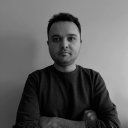
 Aaqib Saeed
· 6 previous affiliations
- Eindhoven University of TechnologySince 2023
- Assistant Professor · Since 2023
- PhD student · 2017–2021
- Philips Japan, Limited2021–2023
- Researcher · 2021–2023
- Philips2021–2023
- Research Scientist AI · 2021–2023
- University of Cambridge2021–2022
- Industrial Fellow · 2021–2022
- Google (United States)2019–2020
- Research Intern - Deep Learning · 2020
- Intern · 2019
- University of Twente2015–2017
- MS student · 2015–2017
Research Overview
Aaqib Saeed focuses on self-supervised learning, decentralized artificial intelligence, and multimodal audio understanding for healthcare. His early work developed representation learning techniques for physiological and acoustic signals collected from wearable sensors. More recently, his research investigates the integration of large language models with federated learning systems and the creation of specialized audio-language models for clinical diagnostics.
Research Trajectory
Saeed's early research concentrated on extracting meaningful patterns from physiological signals collected by wearable devices. In 2017, he developed methods for Personalized Driver Stress Detection with Multi-task Neural Networks using Physiological Signals, utilizing skin conductance and heart rate data to identify physiological responses to everyday challenges. This was complemented by work on Deep Physiological Arousal Detection in a Driving Simulator Using Wearable Sensors. Recognizing the bottleneck of manual data annotation in ubiquitous computing, he transitioned toward unsupervised and self-supervised methods, introducing a framework for Multi-task Self-Supervised Learning for Human Activity Detection to leverage the vast amounts of unlabeled data produced by smart devices.
Expanding into acoustic modeling, he introduced COLA, a contrastive learning approach detailed in Contrastive Learning of General-Purpose Audio Representations, which pre-trained embeddings on large-scale datasets for transfer to diverse classification tasks. This interest in scalable representation learning naturally intersected with decentralized computing. To address privacy and bandwidth constraints on edge devices, he developed FedSTAR, a framework for Federated Self-Training for Semi-Supervised Audio Recognition. This work advanced the research direction of Federated Learning under Decentralized Label Scarcity. He further unified self-supervision with federated learning in Federated Self-Supervised Learning of Multisensor Representations for Embedded Intelligence, extracting robust representations from multi-sensor data without centralizing raw information, contributing to the broader area of Self Supervised Pretraining for High Stakes Label Efficiency.
As his focus on federated systems deepened, Saeed and collaborators addressed the practical challenges of deploying decentralized machine learning in noisy, heterogeneous environments. They proposed FedLN in Federated Learning with Noisy Labels: Achieving Generalization in the Face of Label Noise, a framework that corrects label noise during model initialization and aggregation. This research supported the areas of Label Noise Mitigation in Federated Learning and Adaptive Client Weighting for Heterogeneous Federated Learning. To adapt large models on resource-constrained edge devices, his group later developed DeltaMask, detailed in Federated Fine-Tuning of Vision Foundation Models via Probabilistic Masking, which compresses mask updates to achieve ultra-low communication bitrates, advancing the direction of Mitigating the Federated Learning Communication Bottleneck.
In recent years, Saeed has extensively investigated the intersection of foundation models, clinical audio analysis, and multi-agent systems. His group developed AcuLa, described in Language Models as Semantic Teachers: Post-Training Alignment for Medical Audio Understanding, which aligns audio encoders with frozen medical language models to interpret cardio-respiratory sounds. This was followed by StethoLM: Audio Language Model for Cardiopulmonary Analysis Across Clinical Tasks, an instruction-driven model designed for expert-level auscultation and diagnostic reasoning. Expanding the scope of acoustic health screening, his team introduced MARVEL in Unified Acoustic Representations for Screening Neurological and Respiratory Pathologies from Voice, a privacy-preserving framework that detects multiple disorders simultaneously from derived acoustic features, contributing to the area of Shared Representation Learning via Simultaneous Multi-Task Training.
Concurrently, Saeed has pioneered the automation of federated learning infrastructure using large language models. His group proposed a two-pass active learning strategy in FAST: Federated Active Learning with Foundation Models for Communication-efficient Sampling and Training to minimize human annotation overhead. Articulating a broader vision, he outlined a new paradigm in Position: Agentic Federated Learning for AI-Driven Strategy Design and Optimization, advocating for the use of specialized LLM agents to dynamically configure decentralized deployments. This vision was realized in Helmsman: Autonomous Synthesis of Federated Learning Systems via Collaborative LLM Agents, a multi-agent framework that autonomously plans, codes, and refines complete federated learning solutions from natural language specifications.
Continuing to bridge decentralized paradigms and medical AI, Saeed's group proposed Decentralized Agentic Systems in Beyond Federated Learning: Decentralized Agentic Systems for Self-Evolving Clinical Intelligence, advocating for distributed clinical agents that exchange structured diagnostic reasoning trajectories rather than raw data or numerical model parameters. Extending decentralized clinical acoustics, Saeed also co-authored Unlocking In-Context Learning in Audio-Language Models from Decentralized Medical Audio to elicit in-context capabilities from distributed audio datasets.
Current Directions
Recent work investigates the convergence of large language models with both clinical diagnostics and decentralized system design. In the healthcare domain, Saeed's group is developing multimodal audio-language models capable of interpreting complex cardiopulmonary and respiratory sounds for expert-level clinical reasoning and disease screening. Parallel to this, his research addresses the engineering complexity of decentralized machine learning through "Agentic Federated Learning." By employing collaborative, task-specialized LLM agents, his most recent frameworks autonomously synthesize, simulate, and optimize complete federated learning codebases, significantly reducing the manual overhead required to deploy robust decentralized AI systems.
Profile updated
Loading new papers…
Other researchers whose papers cluster into the same research directions — a proxy for overlapping technical interests and shared intellectual neighborhoods.
See something wrong? Report a mistake