

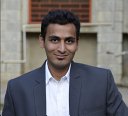
 Aakash Kaku
· 3 previous affiliations
- Google (United States)Since 2023
- Researcher · Since 2023
- New York University2017–2023
- PhD student · 2019–2023
- MS student · 2017–2019
- NYU Langone Health2017–2019
- MS student · 2017–2019
Research Overview
Aakash Kaku focuses on the intersection of deep learning, medical imaging, and clinical rehabilitation. His work emphasizes the development of robust neural architectures for volumetric segmentation, high-resolution action identification, and self-supervised representation learning. By addressing technical bottlenecks such as processing time in MRI analysis and the identification of sub-second functional movements in stroke recovery, his research aims to bridge the gap between proof-of-concept machine learning models and practical clinical deployment.
Research Trajectory
The early phase of Kaku’s research, beginning around 2019, was primarily concerned with Fast Volumetric Segmentation via Deep Learning. During this period, he addressed the computational inefficiencies of traditional brain segmentation tools, which often required hours of processing or manual correction. His work on DARTS: DenseUnet-based Automatic Rapid Tool for brain Segmentation demonstrated a shift toward comprehensive, rapid segmentation of both cortical and deep gray matter structures. This approach was significant for its ability to match the output of established tools like FreeSurfer while drastically reducing processing time, thereby facilitating larger-scale volumetric studies of neurological conditions. This work also contributed to Overcoming Corticocentric Bias in Whole-Brain Modeling by ensuring that deep brain structures were treated with the same analytical rigor as the neocortex. During this same period, he participated in collaborative efforts to apply similar U-Net ensembles to musculoskeletal imaging, specifically for the automated segmentation of knee cartilage in diffusion-weighted MRI.
In 2020, Kaku’s focus expanded into the domain of stroke rehabilitation and the challenge of measuring clinical "dose." Recognizing that recovery often depends on high-intensity training that is difficult to quantify objectively, he led research into Towards data-driven stroke rehabilitation via wearable sensors and deep learning. This work introduced the concept of identifying "functional primitives"—the elemental building blocks of movement—using wearable sensor data. A critical methodological hurdle identified during this transition was the influence of extraneous variables—factors irrelevant to the task that nonetheless skew data distributions. To solve this, he developed Be Like Water: Robustness to Extraneous Variables Via Adaptive Feature Normalization, which proposed a method to make deep learning models more resilient to distribution shifts by adapting feature normalization statistics at test time rather than relying on fixed training statistics.
By 2021, Kaku’s work moved toward fundamental improvements in Self-Supervised Learning for Robust Continual Representations. He investigated how the internal structure of neural networks could be better utilized during training. In Intermediate Layers Matter in Momentum Contrastive Self Supervised Learning, he demonstrated that supervising intermediate layers, rather than just the final output, could significantly enhance representation quality. This research touched upon several key themes in modern deep learning, including Deep Supervision for Training Deep Neural Networks and Redundancy Reduction via Feature Decorrelation. By minimizing the mean squared error between intermediate representations or decorrelating their cross-correlation matrices, he showed that models could achieve superior performance, particularly in low-labeled data regimes common in medical imaging. This period also saw his participation in broader clinical AI applications, such as predicting patient deterioration from chest X-rays and clinical variables.
His most recent work in 2022 has focused on the formalization of datasets and benchmarks to support the next generation of clinical action recognition. He led the development of StrokeRehab: A Benchmark Dataset for Sub-second Action Identification, a large-scale multimodal dataset designed to move the field beyond the recognition of coarse, long-duration actions toward the identification of subtle, sub-second motions. This work is essential for quantifying rehabilitation doses with high temporal resolution. Additionally, he has participated in foundational research regarding deep probability estimation, exploring how models can better estimate the inherent uncertainty in real-world outcomes.
Current Directions
Kaku’s current research trajectory suggests a sustained interest in making deep learning models more efficient, interpretable, and robust for specialized domains. His work on Deep Supervision with Training Only Auxiliary Components indicates a focus on architectural innovations that improve the flow of gradients during training without increasing the computational burden during inference. Furthermore, his emphasis on high-resolution action identification suggests a continuing commitment to developing AI tools that can provide granular, objective data for personalized medicine and physical therapy.
Representative Work
DARTS: DenseUnet-based Automatic Rapid Tool for brain Segmentation This work presents a deep learning-based alternative to traditional brain segmentation software. By utilizing a DenseUnet architecture, the tool provides comprehensive segmentation of cortical and deep gray matter structures, matching the regions defined by the Freesurfer aseg+aparc atlas. The primary contribution is the significant reduction in processing time, which addresses a major barrier to the clinical adoption of volumetric MRI analysis.
Towards data-driven stroke rehabilitation via wearable sensors and deep learning Addressing the lack of objective measurement in stroke recovery, this research utilizes wearable sensors and deep learning to identify functional primitives in movement. The study involves data from 48 individuals and represents an early effort to automate the quantification of rehabilitation doses, providing a pragmatic approach for measuring training intensity in clinical and home settings.
Be Like Water: Robustness to Extraneous Variables Via Adaptive Feature Normalization This paper investigates how extraneous variables—such as sensor placement or image corruption—degrade the performance of deep learning models. Kaku proposes Adaptive Feature Normalization (AFN) as a method to improve robustness. The study demonstrates that models using standard batch normalization often learn features dependent on these irrelevant variables, whereas AFN allows for better generalization across diverse datasets, including surgical activity annotation and stroke movement classification.
Intermediate Layers Matter in Momentum Contrastive Self Supervised Learning In this work, Kaku explores improvements to the Momentum Contrastive (MoCo) method by supervising intermediate layer representations. By introducing loss objectives that encourage similarity or decorrelation in these layers, the research achieves performance gains across multiple medical imaging datasets, including chest X-rays and histopathology. The method is particularly effective when labeled data is scarce, outperforming standard self-supervised approaches.
StrokeRehab: A Benchmark Dataset for Sub-second Action Identification This paper introduces a large-scale, multimodal dataset specifically designed for identifying elemental motions with sub-second durations. Unlike existing datasets that focus on coarse actions, StrokeRehab provides the high temporal resolution necessary for applications in robotics and smart health, particularly for quantifying the number of repetitions in arm impairment rehabilitation.
An artificial intelligence system for predicting the deterioration of COVID-19 patients in the emergency department In this collaborative study, Kaku participated in the development of a prognosis system that combines deep learning for chest X-ray analysis with gradient boosting for clinical variables. The system was designed to assist in the rapid triage of patients by predicting the risk of deterioration within 96 hours, performing at a level comparable to experienced radiologists.
Profile updated
Loading new papers…
Other researchers whose papers cluster into the same research directions — a proxy for overlapping technical interests and shared intellectual neighborhoods.
See something wrong? Report a mistake