

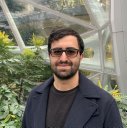
 A. Ali Heydari
· 1 previous affiliation
- Google (United States)Since 2022
- Researcher · Since 2022
Research Overview
A. Ali Heydari focuses on representation learning, medical foundation models, and the application of large language models to complex healthcare data. His trajectory spans foundational improvements in metric learning to the development of personalized biomarker prediction systems. Most recently, his work investigates neuro-symbolic reasoning over electronic health records and the integration of wearable sensor data into multimodal architectures.
Research Trajectory
Heydari’s early work addresses foundational challenges in representation learning, particularly in optimizing distance metrics for complex datasets. He introduced No Pairs Left Behind: Improving Metric Learning with Regularized Triplet Objective, which proposed a regularized triplet objective function to enhance metric learning without the overhead of additional sample mining. This approach explicitly regularized the distance between positive and negative samples, demonstrating improved performance on standard benchmarks and large-scale healthcare datasets like the UK Biobank.
Building on these representation learning techniques, he subsequently applied similarity-based embedding spaces to personalized medicine. In Lifestyle-Informed Personalized Blood Biomarker Prediction via Novel Representation Learning, he developed a framework to predict future blood biomarker values by learning representations from lifestyle factors such as physical activity and sleep. This work moved beyond population-level statistics to establish personalized reference ranges that account for inter-individual variability.
In 2025, Heydari participated in large-scale collaborative efforts evaluating and extending the capabilities of foundation models in specialized domains. He contributed to the research area of The Performance Cliff in Large-Scale Tabular Reasoning through the development of RADAR: Benchmarking Language Models on Imperfect Tabular Data. This benchmark systematically tested how language models handle real-world data imperfections, such as missing values and logical errors, revealing critical gaps in model robustness during data-aware reasoning tasks.
Concurrently, he collaborated on SensorLM: Learning the Language of Wearable Sensors, a family of foundation models trained on 60 million hours of physiological signals paired with hierarchical captions. This work enabled zero-shot activity recognition and natural language descriptions of health data. The project intersected with several broader research areas, including Clinical Readiness for Medical Foundation Models and Temporal Patching for Time Series Transformers. Furthermore, the work advanced methodologies within the research directions of Joint Contrastive and Generative Representation Learning and Decoupling Perception from Reasoning in Multimodal Models.
Moving toward agentic systems for clinical informatics, his recent work focuses on enabling large language models to navigate complex, multi-relational electronic health records (EHRs). He oversaw the development of FHIR-Hopper: A Neuro-Symbolic Agent for Reasoning over EHRs. This framework projects raw EHR data into an episodic chronological graph and equips the model with deterministic traversal tools, significantly improving reasoning accuracy while drastically reducing token usage compared to standard retrieval-augmented generation methods.
Current Directions
The most recent papers in the evidence indicate a strong focus on adapting large language models and foundation models for clinical and physiological data. Recent work investigates neuro-symbolic frameworks that allow language models to reason deterministically over complex electronic health records by structuring the data chronologically. Additionally, ongoing efforts address the integration of continuous wearable sensor data into multimodal architectures, exploring how physiological signals can be treated as a distinct modality for zero-shot health monitoring. A parallel theme involves evaluating and improving the robustness of language models when confronted with imperfect, real-world tabular data.
Profile updated
Loading new papers…
Other researchers whose papers cluster into the same research directions — a proxy for overlapping technical interests and shared intellectual neighborhoods.
See something wrong? Report a mistake